


Self-Care Routines for Mind and Body Health
Between work deadlines, family obligations, and the constant buzz of digital notifications, finding time for yourself can feel like trying to fit a yoga session into a packed commute. But self-care isn’t about carving out hours; it’s about weaving moments of renewal into the fabric of daily life. What if the most effective routines weren’t the ones that require expensive retreats or elaborate rituals, but the ones you can start right now—wherever you are? In practical terms, self-care routines for mind and body health works best when it is applied consistently rather than treated as a one-time fix.
This guide goes beyond one-size-fits-all advice. It breaks down practical, evidence-based strategies to nurture both your mind and body, from the moment you wake up to the time you close your eyes. Whether you’re juggling full-time work, managing household responsibilities, or trying to steal back a few minutes of peace, these routines are designed to be adaptable, realistic, and genuinely restorative. Forget the idea that self-care has to be extravagant. The best routines are the ones you’ll actually follow. A balanced approach to self-care routines for mind and body health also means adjusting the method to fit real-life routines instead of forcing unrealistic habits.
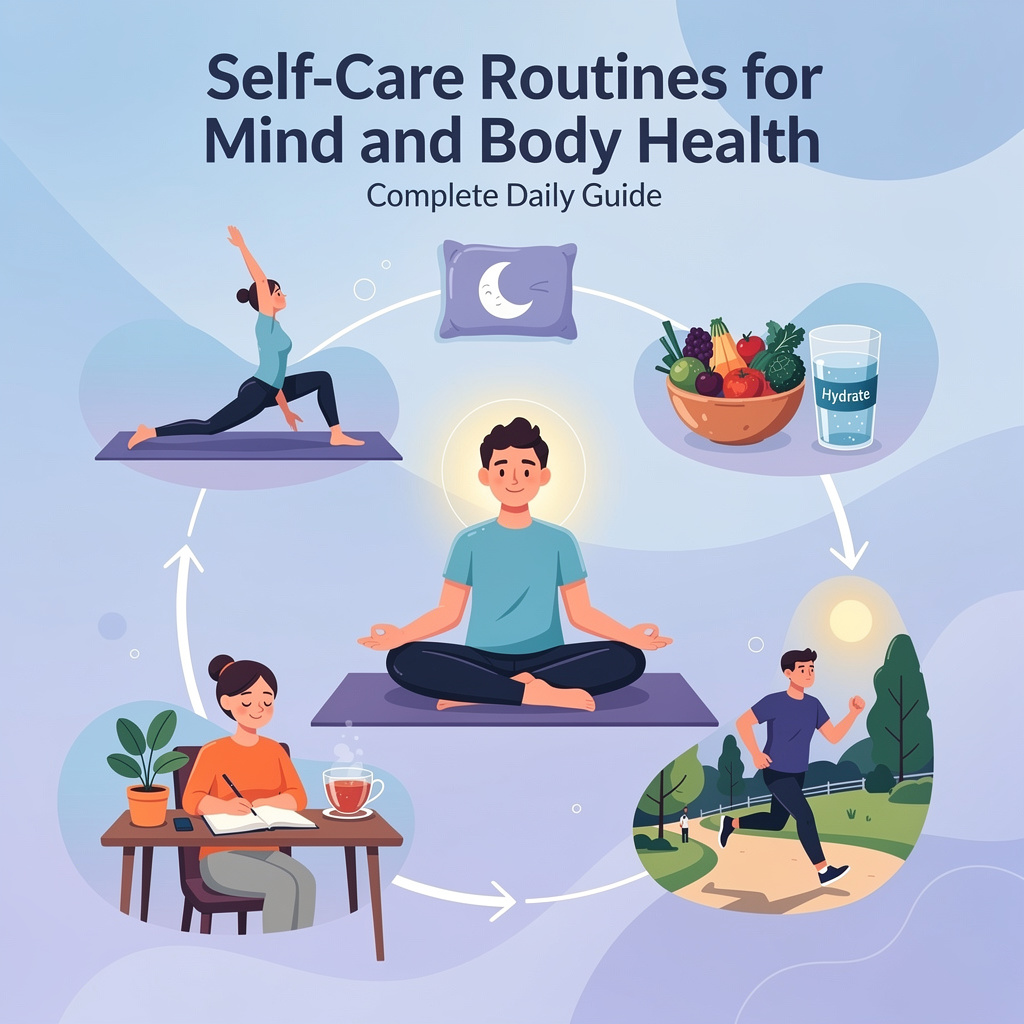
Why Self-Care Isn’t Selfish—It’s a Foundation
Consider how long you’d drive a car without checking the fuel level or tire pressure. Eventually, something would break down. Your mind and body operate on the same principle. Ignoring signals of stress, fatigue, or overwhelm doesn’t make the demands go away—it just sets you up for a slower recovery later. Self-care acts like regular maintenance: it keeps the system running smoothly before minor issues escalate. For long-term results, self-care routines for mind and body health should be simple enough to repeat and flexible enough to adapt when circumstances change.
Research consistently shows that consistent self-care routines are linked to lower stress hormones, improved mood regulation, and even enhanced immune function. In one study published in Health Psychology, participants who practiced daily mindfulness were 30% less likely to report high stress levels compared to those who didn’t. That’s not about escaping daily pressures—it’s about building resilience so they don’t overwhelm you in the first place. The most useful way to think about self-care routines for mind and body health is as an ongoing practice that becomes stronger through small, repeatable actions.
Think of it like budgeting for a rainy day. You’re not avoiding responsibility by putting a few coins away; you’re ensuring you have resources when the storm hits. Self-care isn’t a luxury—it’s a lifeline. When you prioritize it, you’re not just taking care of yourself; you’re making sure you’re in the best possible shape to care for others and meet your commitments. When the basics are handled well, self-care routines for mind and body health becomes easier to maintain without adding unnecessary pressure.
The Myth of Perfect Self-Care
Social media often presents self-care as serene bubble baths and curated Instagram moments. But real self-care doesn’t require perfection. It’s about showing up for yourself consistently, even on days when you can only spare five minutes. Perfectionism is the enemy of progress here, because it sets the bar so high that most people abandon the routine entirely. The key isn’t to do more—it’s to do better with what you already have. In practical terms, self-care routines for mind and body health works best when it is applied consistently rather than treated as a one-time fix.
Imagine two people, both pressed for time. One spends an hour at a spa once a month and feels refreshed for a day, then crashes back into stress. The other takes three minutes each morning to stretch, drink water, and take three deep breaths. Over time, the second person builds a steady foundation of calm that doesn’t depend on external rewards. Small, regular acts compound into something far more powerful than occasional indulgence. A balanced approach to self-care routines for mind and body health also means adjusting the method to fit real-life routines instead of forcing unrealistic habits.
This guide focuses on routines that work with your schedule, not against it. You’ll find strategies that fit into mornings, afternoons, evenings, and even unexpected pockets of downtime. The goal isn’t to add more to your plate—it’s to rearrange the plates you already have. For long-term results, self-care routines for mind and body health should be simple enough to repeat and flexible enough to adapt when circumstances change.
Morning Routines: The Blueprint for a Calm Day
The way you start your morning sets the tone for everything that follows. If you begin with frantic scrolling and a rushed breakfast, your nervous system is already primed for stress before the day officially begins. Conversely, a mindful morning routine can act like a buffer, soaking up some of life’s chaos before it reaches you. The most useful way to think about self-care routines for mind and body health is as an ongoing practice that becomes stronger through small, repeatable actions.
Let’s be clear: this isn’t about becoming a morning person. It’s about making the most of the time you naturally have. Whether your alarm goes off at 5 a.m. or 9 a.m., these steps can help you wake up with intention instead of autopilot. When the basics are handled well, self-care routines for mind and body health becomes easier to maintain without adding unnecessary pressure.
Hydrate First: Break the Night Cycle
During sleep, your body loses fluids through breathing and minor perspiration. Wake up slightly dehydrated, and your brain starts the day in a fog. A glass of water upon waking isn’t just about quenching thirst—it kickstarts your metabolism, supports cognitive function, and even helps regulate appetite later in the day. In practical terms, self-care routines for mind and body health works best when it is applied consistently rather than treated as a one-time fix.
Keep a glass or bottle of water by your bed the night before. Before you reach for your phone or coffee, drink it. It only takes a minute, but it’s a physical act of self-respect. Some people add a squeeze of lemon to balance electrolytes and aid digestion, but plain water works perfectly fine if that’s all you have. A balanced approach to self-care routines for mind and body health also means adjusting the method to fit real-life routines instead of forcing unrealistic habits.
Think of hydration as the first domino in your morning routine: knock it over, and the rest of your day flows more smoothly.
Move Your Body: 5 Minutes That Change Your State
You don’t need a full workout to benefit from movement in the morning. Gentle stretches, a brisk walk, or even dancing to one song while the coffee brews can shift your energy from sluggish to alert. Movement increases blood flow to the brain, releasing endorphins that boost mood and focus. Even better, it prevents stiffness and sets a rhythm for the body to follow the rest of the day. For long-term results, self-care routines for mind and body health should be simple enough to repeat and flexible enough to adapt when circumstances change.
Try this: stand up, reach your arms overhead, and take three deep breaths. Then, roll your shoulders, bend side to side, and do gentle twists. Five minutes. That’s all it takes. If you’re feeling ambitious, follow it with a two-minute cold splash on the wrists or face to wake up your nervous system. The shock of cold interrupts stress patterns and signals to your body that it’s time to be alert. The most useful way to think about self-care routines for mind and body health is as an ongoing practice that becomes stronger through small, repeatable actions.
This isn’t about burning calories or hitting fitness milestones. It’s about reminding your body that you’re in charge—not the pile of unanswered emails or the argument you had yesterday.
Feed Your Brain: Food That Feeds Your Mood
Breakfast doesn’t have to be gourmet, but it should include a balance of protein and fiber to stabilize energy. Processed carbs and sugary cereals spike blood sugar, leading to crashes that leave you irritable and fatigued. Instead, opt for whole, minimally processed foods that provide sustained fuel. When the basics are handled well, self-care routines for mind and body health becomes easier to maintain without adding unnecessary pressure.
A simple routine: pair a protein source—like eggs, yogurt, or nut butter—with a complex carb such as oatmeal, whole-grain toast, or fruit. Add healthy fats like avocado or nuts to slow digestion and keep you full longer. Even something as basic as scrambled eggs with spinach and a slice of whole-grain toast can make a difference in how you feel by mid-morning. In practical terms, self-care routines for mind and body health works best when it is applied consistently rather than treated as a one-time fix.
Prep the night before when possible. A jar of overnight oats with chia seeds and berries requires zero effort in the morning. Or portion out nuts and cheese cubes for a grab-and-go option. The goal isn’t perfection—it’s consistency with simplicity. A balanced approach to self-care routines for mind and body health also means adjusting the method to fit real-life routines instead of forcing unrealistic habits.
Quiet the Mind: 3 Methods to Silence the Noise
Mornings are often the only time you have before the world starts demanding your attention. Use it to anchor your mind. This doesn’t require meditation cushions or guided apps—just a quiet corner and a willingness to be present.
Try one of these:
- Breath counting: Sit upright, close your eyes, and count your breaths from one to ten. When you lose track, start over. It sounds simple, but it trains your mind to pause instead of racing ahead.
- Gratitude listing: Write down three things you’re thankful for. They don’t need to be profound—sunlight through the window, a warm shower, a good night’s sleep. The act of naming what’s going well shifts your brain’s focus from lack to abundance.
- Sensory grounding: Name five things you can see, four you can touch, three you can hear, two you can smell, and one you can taste. This technique, known as the 5-4-3-2-1 method, is a powerful way to interrupt anxiety loops.
Choose one method and stick with it for a week. Notice how it affects your mood and energy throughout the day. The aim isn’t spiritual enlightenment—it’s practical calm.
Afternoon Routines: Recharge Before You’re Empty
By mid-afternoon, most people hit a slump. Energy dips, focus wanes, and the temptation to reach for caffeine or sugar grows stronger. This isn’t laziness—it’s biology. Your circadian rhythm naturally slows down in the early afternoon as a cue to rest. Fighting it only leads to burnout.
Instead of fighting the slump, work with it. These routines are designed to restore balance before you hit rock bottom.
The Power of Micro-Breaks: 90 Seconds That Save Hours
Research from the Journal of Occupational Health Psychology shows that taking short breaks throughout the day improves focus and reduces errors. The key isn’t the length of the break, but the quality.
Set a timer for 90 seconds every hour and step away from your workspace. Close your eyes, stretch your wrists, or look out the window at something far away to rest your eyes. Avoid screens during this time—give your brain a chance to reset.
One effective trick: the “eyes-off screen” rule. After every 30 minutes of focused work, look away from your screen for at least one minute. This simple habit can prevent eye strain and mental fatigue without disrupting your workflow.
Snack Smart: The Brain-Friendly Way to Eat
When the 3 p.m. energy crash hits, it’s easy to grab whatever’s quick—chips, a candy bar, or a third cup of coffee. But these choices often make the crash worse. Opt instead for snacks that combine protein, healthy fats, and fiber to stabilize blood sugar and keep your mind sharp.
- Apple slices with almond butter
- Hummus with carrot or celery sticks
- A small handful of walnuts and a few dark chocolate squares
- Greek yogurt with a sprinkle of granola
The goal isn’t to eliminate cravings entirely—it’s to choose options that fuel your brain without derailing your energy. Keep some of these at your desk or in your bag so the healthy choice is the easiest one.
Reset Your Posture: The 5-Minute Fix for Desk Damage
Sitting hunched over a keyboard compresses your spine, tightens your hips, and weakens your core. Over time, this creates tension that can spread to your shoulders, neck, and even your mood. A quick posture reset can relieve pressure and improve breathing.
Stand up, plant your feet hip-width apart, and gently roll your shoulders back. Lengthen your spine as if a string is pulling you upward from the crown of your head. Take three deep breaths, feeling your ribs expand fully. Then, do a gentle cat-cow stretch to mobilize your spine. These five minutes counteract the physical toll of sitting and help you return to work feeling more alert.
If your workplace allows it, consider a standing desk or using a high counter for parts of your workday. Alternating between sitting and standing can reduce stiffness and improve circulation without requiring extra time.
Hydration Hack: When Water Feels Like a Chore
If drinking plain water feels like a task, infuse it with flavor. Add slices of cucumber, lemon, or berries to a pitcher and keep it in the fridge. Herbal teas—like peppermint, chamomile, or green tea—also count toward hydration and offer a mental break when you steep the leaves.
The act of brewing tea becomes a ritual in itself: boiling water, steeping leaves, sipping slowly. It’s a built-in pause that signals to your body that it’s time to slow down, even for a few minutes.
Evening Routines: Prepare to Unplug
As the day winds down, your nervous system needs signals that it’s safe to rest. Scrolling through work emails or watching intense shows keeps your brain in an alert state, making it harder to fall asleep. Instead, build a wind-down routine that tells your body and mind it’s time to transition from doing to being.
Digital Detox: The Art of Turning Off
Set a screen curfew at least one hour before bedtime. This includes phones, tablets, computers, and TVs. The blue light emitted by screens suppresses melatonin, the hormone that regulates sleep. Even if you don’t feel the effects right away, consistent late-night screen time disrupts your sleep cycle.
Replace the habit with something low-key: reading a physical book, journaling, knitting, or listening to calming music. If you must use a device, switch it to night mode and dim the brightness as much as comfortably possible.
Try this: charge your phone outside the bedroom. Use an alarm clock instead. It removes the temptation to check messages in the middle of the night and creates a physical boundary between work and rest.
Breathwork for Sleep: The 4-7-8 Technique
This simple breathing exercise, developed by Dr. Andrew Weil, helps calm the nervous system and prepare the body for sleep.
- Inhale quietly through your nose for four counts.
- Hold your breath for seven counts.
- Exhale completely through your mouth for eight counts.
- Repeat three to four times.
The extended exhale activates the parasympathetic nervous system—the rest-and-digest mode—signaling to your body that it’s time to relax. It’s a powerful tool that takes less than two minutes but can make the difference between restlessness and restful sleep.
Body Scan: The 5-Minute Tune-Up
Lie on your back with your legs slightly apart and arms relaxed at your sides. Close your eyes and bring your attention to your toes. Notice any tension or discomfort, then consciously relax them. Slowly move your focus up through your feet, calves, knees, thighs, hips, abdomen, chest, arms, hands, neck, and finally your face and scalp. Spend about 10–15 seconds on each area.
This practice not only relaxes your muscles but also trains your mind to let go of physical stress. You’re not forcing sleep—you’re giving your body the space to find it naturally. If your mind wanders, gently bring it back to the next body part without judgment.
Midweek Reset: The Thursday Tune-Up
Some weeks feel relentless, like a hamster wheel that never stops spinning. By Thursday, you may start feeling the weight of accumulated stress. This is the perfect moment to pause and reset—not just in the evening, but in the middle of the workweek.
Take 30 minutes on a Thursday afternoon to step away from work. Go for a short walk outside, even if it’s just around the block. Breathe in fresh air and let your thoughts wander without structure. If you can’t step away physically, close your eyes for five minutes and do a mini body scan at your desk.
Use this time to reflect on what’s working and what’s draining you. Release the guilt of “not doing enough.” You’re not failing—you’re human. The goal isn’t to power through; it’s to course-correct before the week spirals out of control.
Weekend Routines: Deep Recharge and Reflection
Weekends offer a rare chance to step off the treadmill and reconnect with yourself. But too often, they turn into catch-up marathons of chores, errands, and social obligations. A self-care weekend isn’t about productivity—it’s about restoration.
Create a Slow Morning
If possible, wake up without an alarm. Move at your natural pace—stretch, sip tea or coffee, and enjoy a leisurely breakfast without rushing to tackle a to-do list. This isn’t laziness; it’s giving your nervous system permission to slow down.
Use the extra time to journal, sketch, or simply observe the world through a window. Notice how different this feels from Monday through Friday. The contrast is the point—the goal is to remind your body what it feels like to be truly at ease.
Move Your Body Without Goals
Exercise shouldn’t always be about burning calories or hitting milestones. Sometimes, it’s enough to move simply for the joy of movement. Go for a walk in a park, dance to your favorite music, or try a gentle yoga flow. Let the activity be the reward, not the result.
If your body feels stiff or tired, prioritize recovery over intensity. Light stretching, foam rolling, or even a warm bath can ease tension and improve sleep. The key is to listen to your body instead of pushing through discomfort.
Express Yourself Creatively
Creativity isn’t reserved for artists or writers. It’s a form of self-expression that reduces stress and fosters mental clarity. Spend 20 minutes doing something hands-on: painting, playing an instrument, writing, cooking a new recipe, or rearranging a room.
You don’t need to produce a masterpiece. The goal is to engage in an activity that absorbs your attention fully, a phenomenon known as “flow.” Flow states quiet mental chatter and leave you feeling refreshed and invigorated.
FAQ
What is the most important thing to understand about self-care routines for mind and body health?
The most important point is to focus on practical context, not isolated facts. A useful article should explain what matters, why it matters, and how the reader can apply the information correctly.
How can readers use this information effectively?
Readers should start with the main ideas, compare them with their own situation, and then apply the most relevant advice step by step.
What common mistake should readers avoid?
The most common mistake is treating a broad topic as one simple answer. Better results come from checking details, understanding context, and avoiding unsupported claims.
Is this topic likely to change over time?
Yes, some details can change, especially statistics, recent events, product information, and public profiles. Readers should verify time-sensitive facts before making decisions.
Conclusion
A strong result depends on applying the main ideas consistently rather than treating them as one-time advice. Use the guidance above as a practical reference, focus on the details that matter most for your situation, and keep improving your approach over time. The most useful next step is to review the key points, choose one action related to self-care routines for mind and body health, and put it into practice with care.